
take control of your child’s myopia
Myopia Management

take control of your child’s myopia
Myopia Management
At Primary Eye Care Associates in Chicago, we provide personalized and comprehensive care for patients dealing with myopia. We understand the importance of early intervention and effective management strategies to help maintain your or your child’s vision and overall eye health.
What is myopia?
Myopia, commonly known as nearsightedness, is a refractive error that affects your ability to see distant objects clearly. It is often the result of the eyeball being too long or the cornea (the transparent front layer of the eye) being too curved. Generally, myopia starts during childhood as the eyes grow and develop, and it often worsens throughout adolescence and young adulthood.
Research has shown that children in Chicago today face a higher risk of developing myopia. One significant factor is the changing lifestyles and habits of children, particularly the increased engagement in close-up tasks. Many studies have indicated a link between the rise in myopia and the extensive use of electronic devices like smartphones, tablets, and computers. While correlations have been observed, the specific relationship between certain behaviors and myopia development is still not fully understood.
What are the symptoms of myopia?
Typical symptoms of myopia include:
- Blurry vision when looking at distant objects
- Squinting
- Eye strain and discomfort
- Frequent blinking or rubbing of the eyes
Myopia can have a significant impact on the daily lives of children, affecting academic performance, participation in sports, social interactions, independence, and even self-esteem. Our skilled optometrist, Dr. Steven Chander, specializes in diagnosing and treating myopia in both children and adults. He also has extensive experience working with children who have progressive myopia, where the condition worsens over time.
What causes myopia?
The exact cause of myopia is unknown, but it is believed that genetics and environmental factors play a role. Here are some key factors that contribute to the development of myopia:
- Genetics: A family history of myopia increases the likelihood of developing the condition. If one or both parents are nearsighted, their children are more likely to be nearsighted as well.
- Environmental factors: Spending long hours focusing on close-up tasks, such as reading, writing, or using digital devices, can contribute to the development of myopia. This is known as “near work.”
- Lack of outdoor time: Studies have shown that spending less time outdoors and not getting enough exposure to natural sunlight may increase the risk of myopia. Outdoor activities can help maintain a healthy balance between near work and distance vision.
- Eye structure: Myopia occurs when the eyeball is elongated or the cornea is too curved, causing light to focus in front of the retina rather than directly on it. This results in blurry distance vision.
Why is myopia management important?
Myopia management is important for several reasons:
- Slow down myopia progression: Effective myopia management can help slow down the rate at which nearsightedness progresses, reducing the severity of the condition over time.
- Lower risk of eye-related complications: High levels of myopia are associated with an increased risk of developing serious eye conditions later in life, such as retinal detachment, cataracts, glaucoma, and myopic macular degeneration. By managing myopia early on, you can reduce the likelihood of these complications.
- Improve the quality of life: Managing myopia can lead to better vision, which positively impacts daily activities such as reading, driving, and engaging in sports. This can enhance a person’s overall quality of life and promote greater independence.
- Boost academic and social performance: For children, myopia management can improve their ability to see clearly, which can lead to better academic performance and increased confidence in social situations.
- Reduce reliance on corrective eyewear: Effective myopia management may result in less dependency on glasses or contact lenses, providing more freedom for individuals to engage in various activities without the constraints of corrective eyewear.
Treatment options for myopia
At Primary Eye Care Associates, we offer a range of myopia management services tailored to meet the individual needs of our patients. Our goal is to slow down the progression of myopia and reduce the risk of associated eye problems later in life.
When you bring your child to us, Dr. Chander, our experienced specialist in diagnosing and treating myopia in children and adults, will conduct a comprehensive eye exam and assess their medical history. Both parents and children will be involved in the treatment process. By engaging the whole family, we ensure that parents understand the available options and that children feel comfortable with optometry and visiting vision specialists.
Some of the myopia management options we provide include:
Soft contact lenses
Soft contact lenses, including multifocal and specially designed lenses, can help manage myopia by simultaneously correcting nearsightedness and reducing eye strain. These lenses have been shown to be effective in slowing myopia progression for some patients. At Primary Eye Care Associates, we offer a range of soft contact lenses for treating myopia, including NaturalVue® one day disposable multifocal contact lenses, Bausch & Lomb, and MiSight®.
MiSight® contact lenses
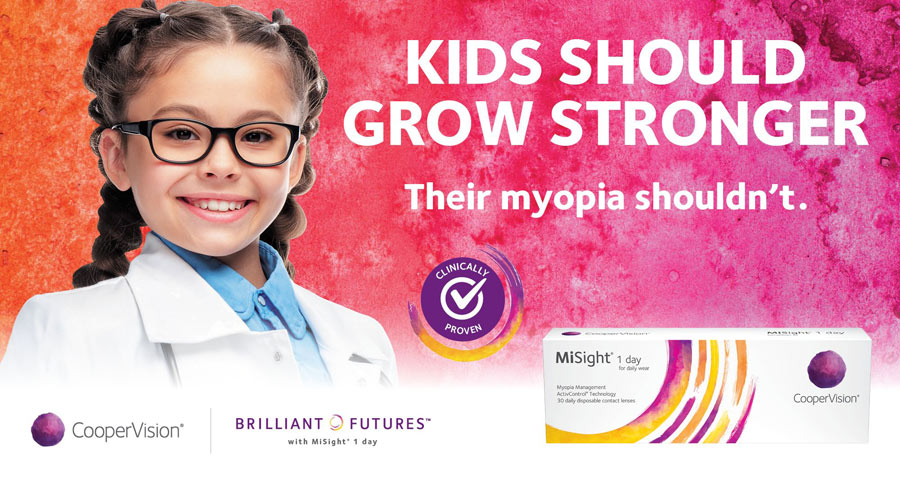
It is now possible to slow the progression of myopia in children who are 8-12 years old with Cooper MiSight® 1 day contacts, the only soft contact lens FDA-approved to treat myopia. FDA approval signifies that the lenses have been thoroughly tested and have met all established safety requirements.
At Primary Eye Care Associates, we are certified providers of MiSight® 1 day contact lenses. This form of myopia management is safe and proven to be effective. Kids ages 8-12 wearing MiSight® 1 day contact lenses experienced an average of 59 percent reduction of myopia progression when used over three years.
Prescription eye drops
Prescription eye drops, such as low-dose atropine, are effective in slowing the progression of myopia in some patients. These drops are administered under the supervision of our eye care professionals and are adjusted as needed based on the patient’s response to the treatment.
Orthokeratology
Orthokeratology, or ortho-k, involves the use of specially designed contact lenses worn overnight to temporarily reshape the cornea. This non-surgical treatment can help slow down myopia progression and improve vision during the day without the need for glasses or contact lenses.
Primary Eye Care Associates in Chicago is proud to provide Euclid orthokeratology (ortho-k) lenses as an effective solution for slowing the progression of myopia. Our experienced eye care professionals are experienced in fitting ortho-k lenses for both adults and children, ensuring optimal results in myopia management.
Corneal reshaping technology (CRT) lenses
Corneal reshaping technology (CRT) lenses, a type of ortho-k lenses, are also specifically designed to temporarily reshape the cornea during sleep. They provide clear vision without the need for glasses or daytime contact lenses.
At Primary Eye Care Associates, we offer Cooper Paragon CRT® lenses as an excellent option for myopia management through ortho-k treatment. These lenses are made from highly oxygen-permeable materials and are designed to gently mold the cornea overnight. By wearing Paragon CRT® lenses during sleep, the cornea’s shape is altered, allowing for clear vision throughout the day.
Schedule an appointment in Chicago
Our team at Primary Eye Care Associates is committed to providing the best possible care for our patients with myopia in Garfield Park and throughout Chicago, Illinois. If you or your child are experiencing nearsightedness or have concerns about myopia progression, contact us today to schedule an appointment.
Sources:
- CooperVision- Learn About Myopia